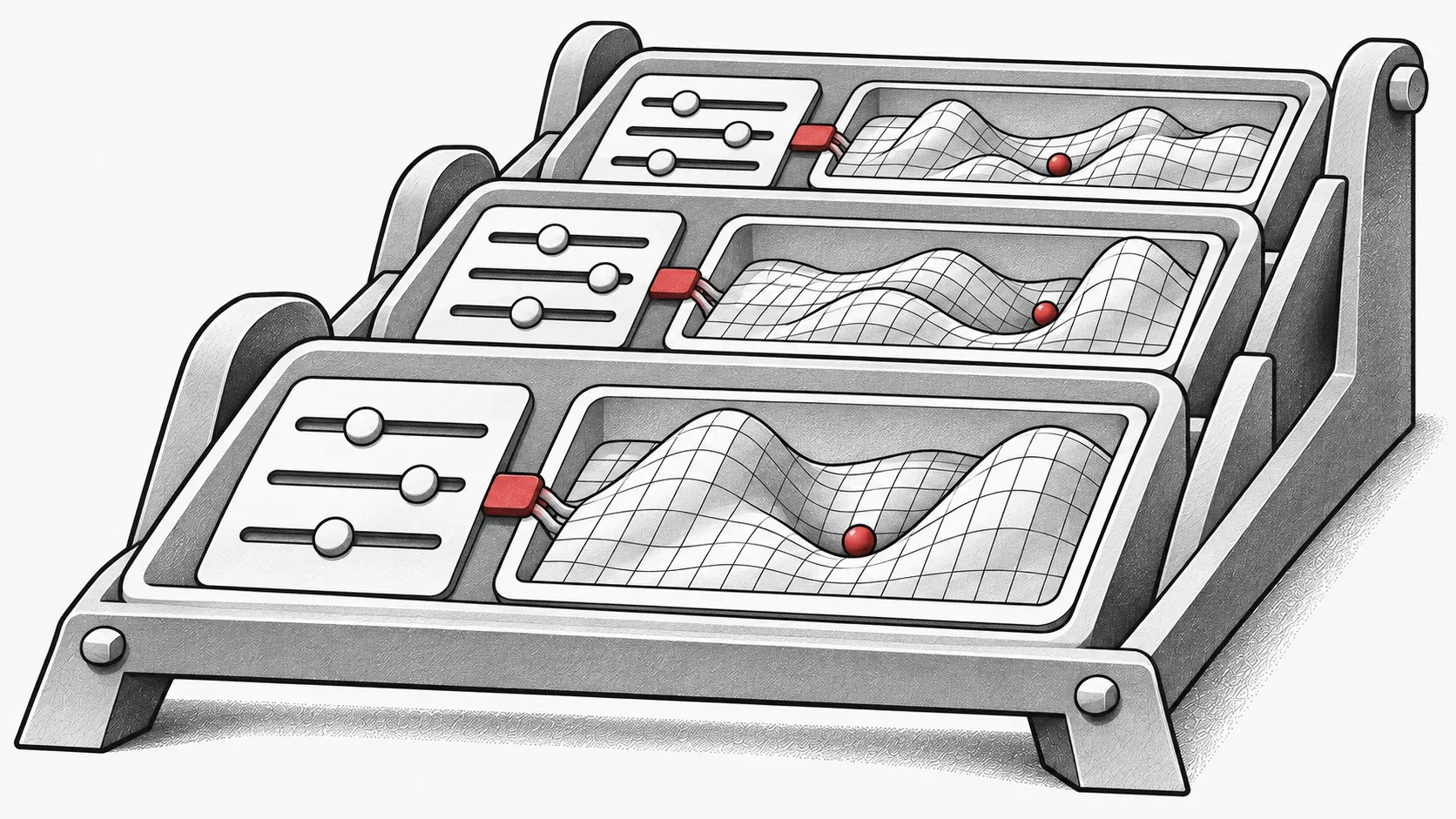
Adaptation can operate on the way a system searches as well as on the solutions it finds. MetaDE brings this idea into EvoX through two connected evolutionary levels: one solves the target problem, while the other evaluates which DE configurations make that search effective. MetaDE
Background
In the field of Evolutionary Computation, the performance of algorithms is often significantly influenced by the choice of hyperparameters. Determining the most suitable parameter settings for a specific problem has been a longstanding research challenge. Differential Evolution (DE), as a classical evolutionary algorithm, is widely favored for its simplicity and robust global search capability; nonetheless, its performance is highly sensitive to hyperparameter selection. Conventional methods typically rely on either experience-based tuning or adaptive mechanisms to improve performance. However, in the face of diverse problem scenarios, these approaches frequently struggle to balance efficiency and broad applicability.
The concept of “Meta-Evolution” was introduced as early as the previous century, aiming to use evolutionary algorithms themselves to optimize the hyperparameter configurations of these algorithms. Although meta-evolution has existed for many years, its practical application has been constrained by the high computational demands. Recent advances in GPU computing have eased these constraints, providing strong hardware support for evolutionary algorithms. In particular, the introduction of the distributed GPU-accelerated EvoX framework has greatly facilitated the development of GPU-based evolutionary algorithms. Against this backdrop, our research team proposed a novel meta-evolution approach that leverages DE to evolve its own hyperparameters and strategies, thereby offering a new avenue to solve the longstanding parameter-tuning problem in evolutionary algorithms.
What Is Meta-Evolution?
Meta-evolution uses an evolutionary algorithm to search the configurations of another evolutionary algorithm.
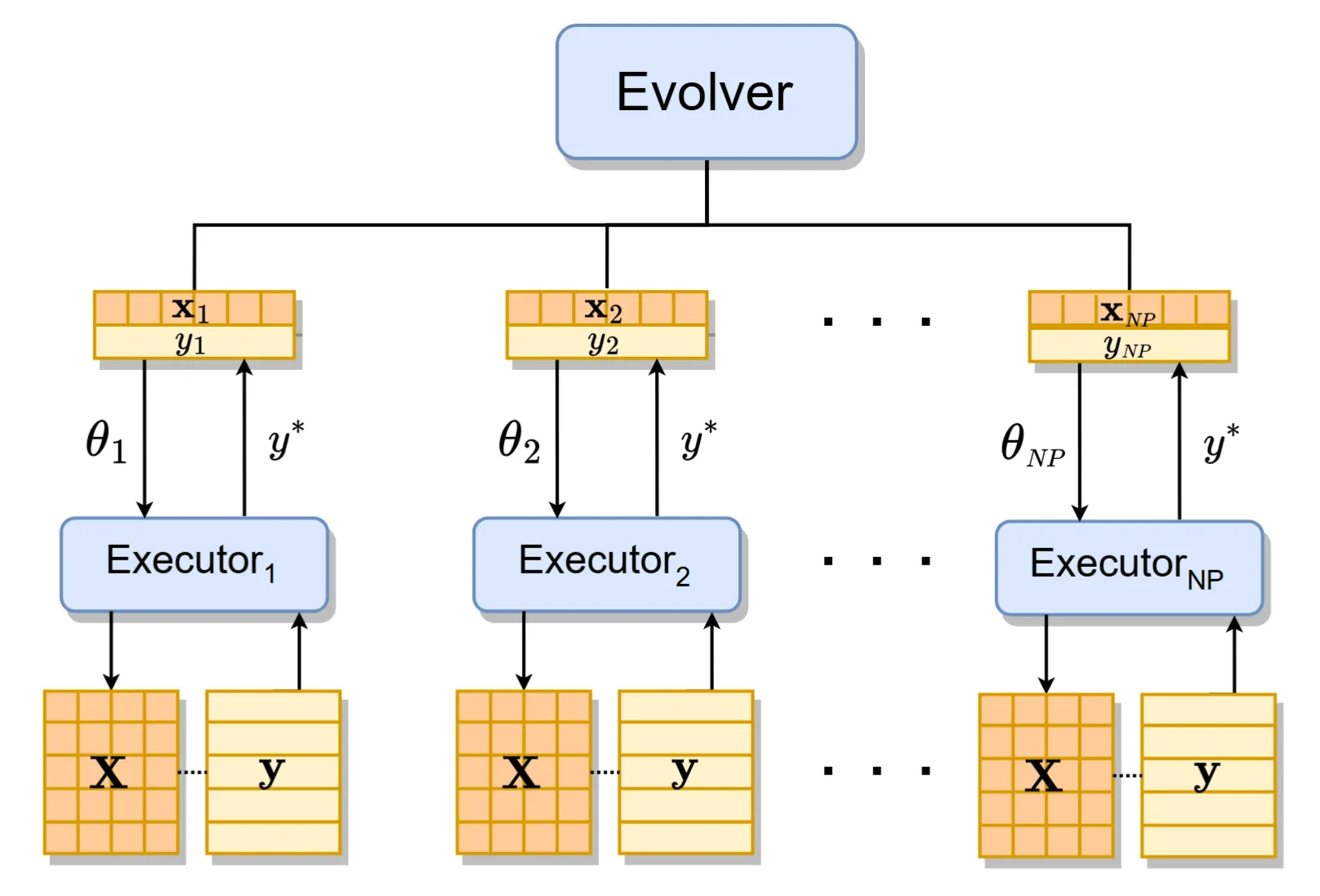
MetaDE implements this as two levels: an executor uses parameterized DE to solve the target problem, while an evolver uses DE to search the executor’s parameters and strategies. The executor’s optimization performance provides the feedback for the outer search. GPU batching makes it practical to evaluate multiple configurations in parallel.
Algorithmic Implementation
MetaDE employs tensor-based techniques and GPU acceleration to enable efficient parallel computing. By processing many individuals of a population simultaneously, the overall computational efficiency is markedly improved, making it particularly advantageous in single-objective black-box optimization and large-scale optimization problems. Through tensorization of key parameters and data structures (e.g., population, fitness, strategy parameters), MetaDE not only achieves higher computational efficiency but also enhances its capacity to tackle complex optimization challenges. Compared with classical DE and other evolutionary algorithms (EAs), MetaDE shows superior performance in solving large-scale problems. Owing to the tensor-based approach, MetaDE harnesses computational resources more effectively, yielding faster solutions and more precise optimization outcomes than traditional methods.
PDE Architecture
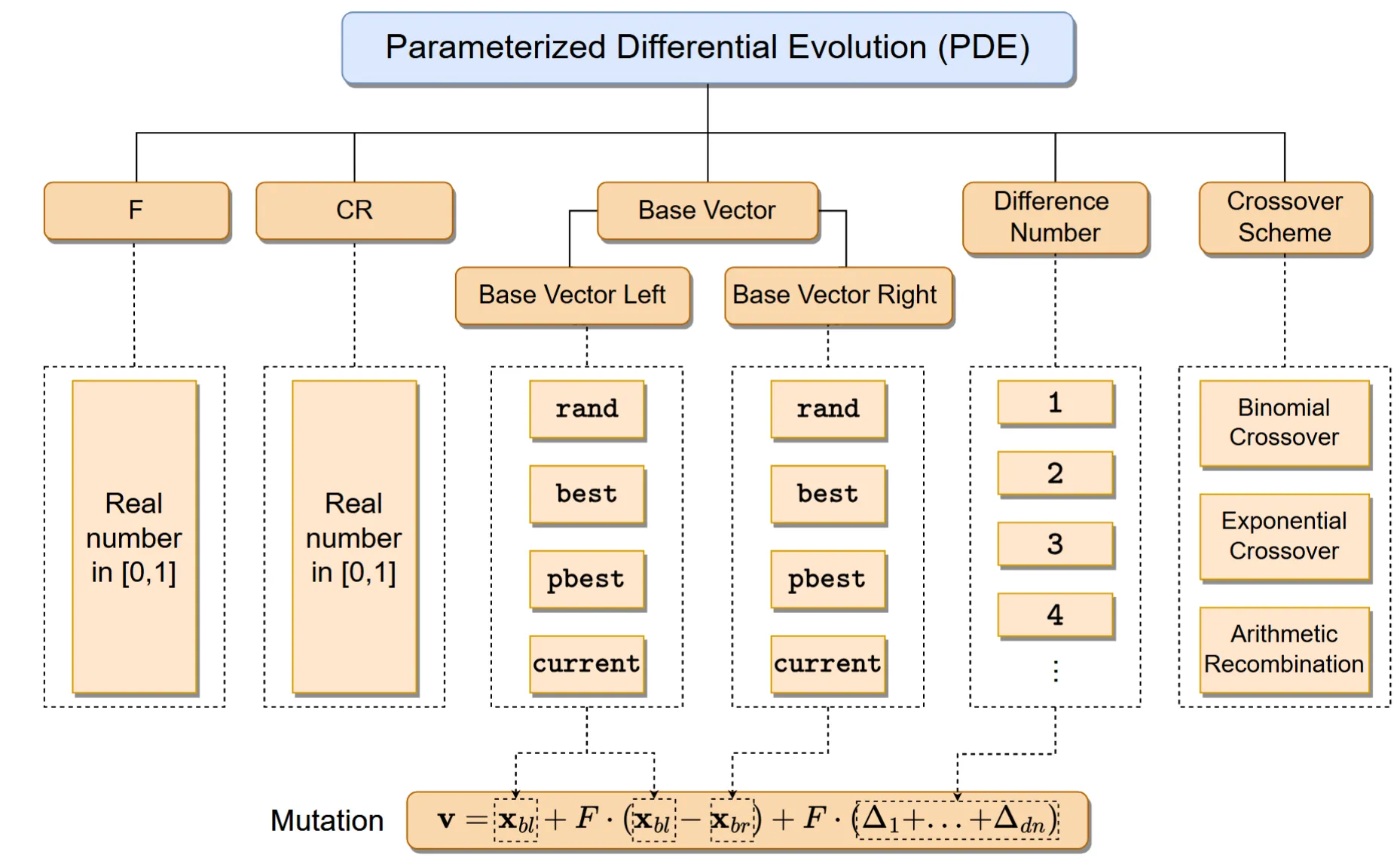
The research team first proposed a parameterized DE algorithm framework (PDE) that fully supports modifications of parameters and strategies. In this framework, F and CR are continuous parameters, whereas other parameters are discrete. The dashed boxes indicate the range of allowable parameter values. The mutation function is derived from the left and right base vectors, along with the parameter controlling the number of difference vectors.
MetaDE Architecture
MetaDE adopts a two-layer structure, comprising an evolver (upper layer) and multiple executors (lower layer). The evolver is a DE (or potentially another evolutionary algorithm), responsible for optimizing the parameters of PDE. Each individual x_i in the evolver’s population corresponds to a unique parameter configuration θ_i . These configurations are passed to the PDE to instantiate different DE variants, each managed by an executor that runs independently on the given optimization task. Each executor returns its best fitness value y^* to the evolver, which assigns that fitness value y_i to the corresponding individual x_i.
Experimental Performance
To comprehensively assess the effectiveness of MetaDE, the research team performed systematic experiments spanning multiple benchmark tests and real-world scenarios. Each experiment used an evolver (DE with rand/1/bin strategy) and executors (PDE with a population size of 100). Key experimental components include:
CEC2022 Benchmark
Comparing MetaDE to various DE variants in single-objective optimization tasks.
Comparison with the Top Four CEC2022 Algorithms
Evaluating MetaDE against the four best-performing algorithms from the CEC2022 competition under identical function evaluations (FEs) budgets.
Function Evaluations (FEs) Under Fixed Wall-Clock Time
Analyzing MetaDE’s computational efficiency under GPU acceleration.
Robot Control Tasks
Applying MetaDE to robot control tasks in a Brax platform environment to validate its practical utility.
CEC2022 Benchmark: Comparison with Mainstream DE Variants
The team compared MetaDE to several representative DE variants on the CEC2022 benchmark suite, including:
- Standard DE (rand/1/bin)
- SaDE and JaDE (adaptive DE algorithms)
- CoDE (DE with strategy integration)
- SHADE and LSHADE-RSP (success-history-based adaptive DE)
- EDEV (integrated DE variants)
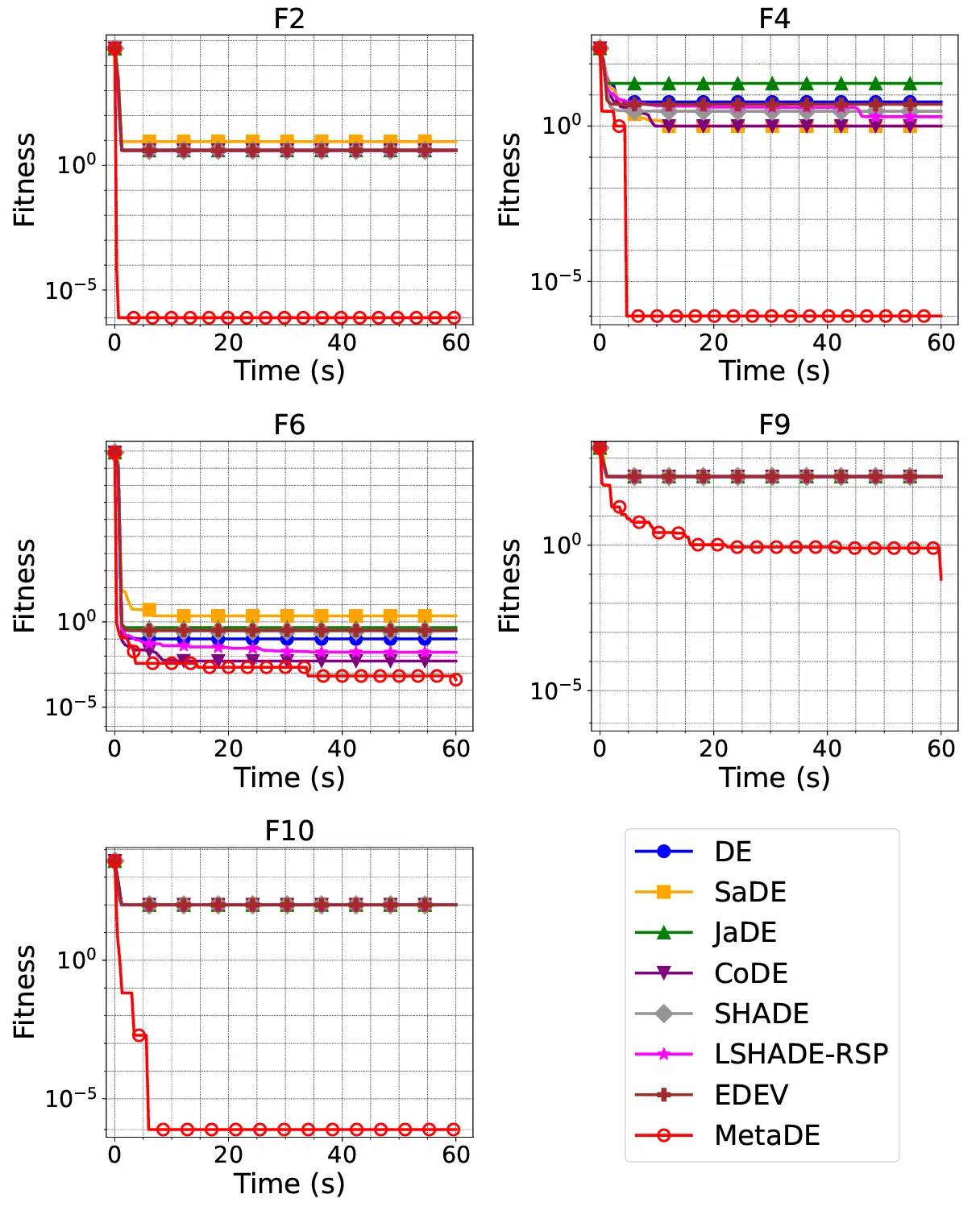
All algorithms were implemented on the EvoX platform, utilizing GPU acceleration with a population size of 100 for fairness. Experiments were conducted on different dimensionalities (10D and 20D) under the same computational time constraint (60 seconds).
10D CEC2022 Optimization Results
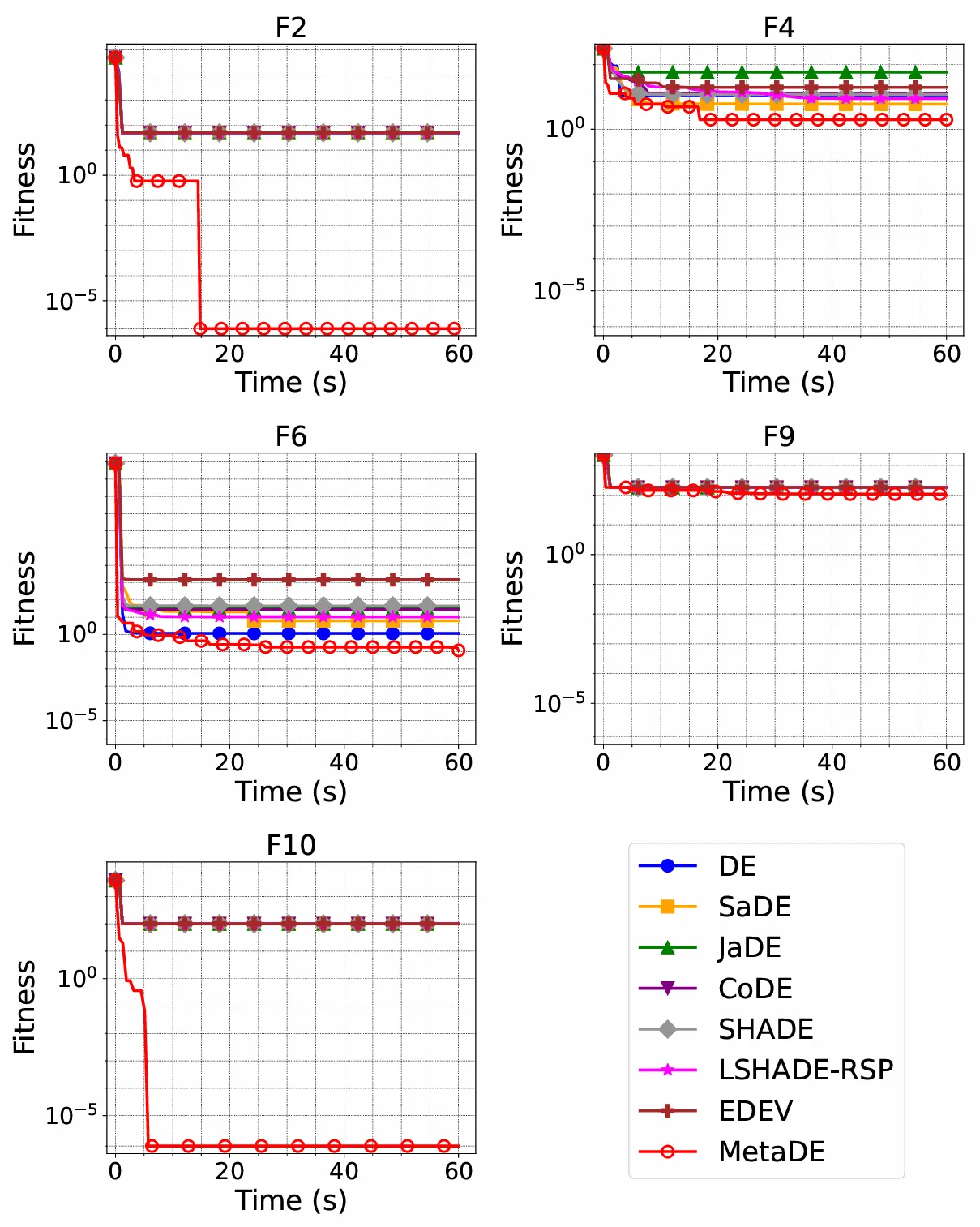
20D CEC2022 Optimization Results
MetaDE generally achieves more rapid and stable convergence across most test functions. Its parameterized DE (PDE) coupled with upper-layer optimization enables dynamic adaptation to different problem spaces, improving overall robustness and search performance.
Comparison with Top Four CEC2022 Algorithms (Under Identical FEs)
To further evaluate MetaDE’s optimization capability, we compared it with the top four algorithms from the CEC2022 competition within the same function evaluation budget:
- EA4eig: A hybrid method integrating multiple EAs
- NL-SHADE-LBC: An improved adaptive DE
- NL-SHADE-RSP-MID: An enhanced SHADE with midpoint estimation
- S-LSHADE-DP: A DE variant maintaining population diversity through dynamic perturbation
Each of these algorithms was run with its official parameter settings and source code under the same FE constraints. Statistical comparisons (Wilcoxon rank-sum test, significance level 0.05)
were conducted between MetaDE and each baseline on the CEC2022 test suite. The last row of the table shows the performance of each algorithm compared to MetaDE on the different test functions: + (significantly better), ≈ (no significant difference), and − (significantly worse).
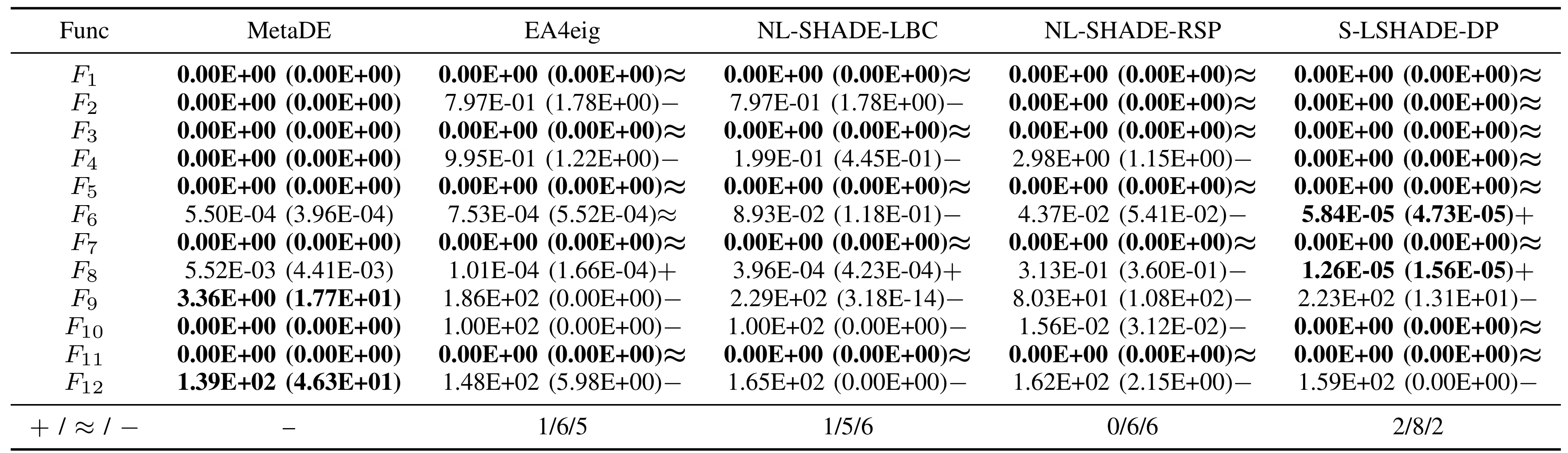
Comparison of 10D CEC2022 Competition Algorithms (Same FEs)
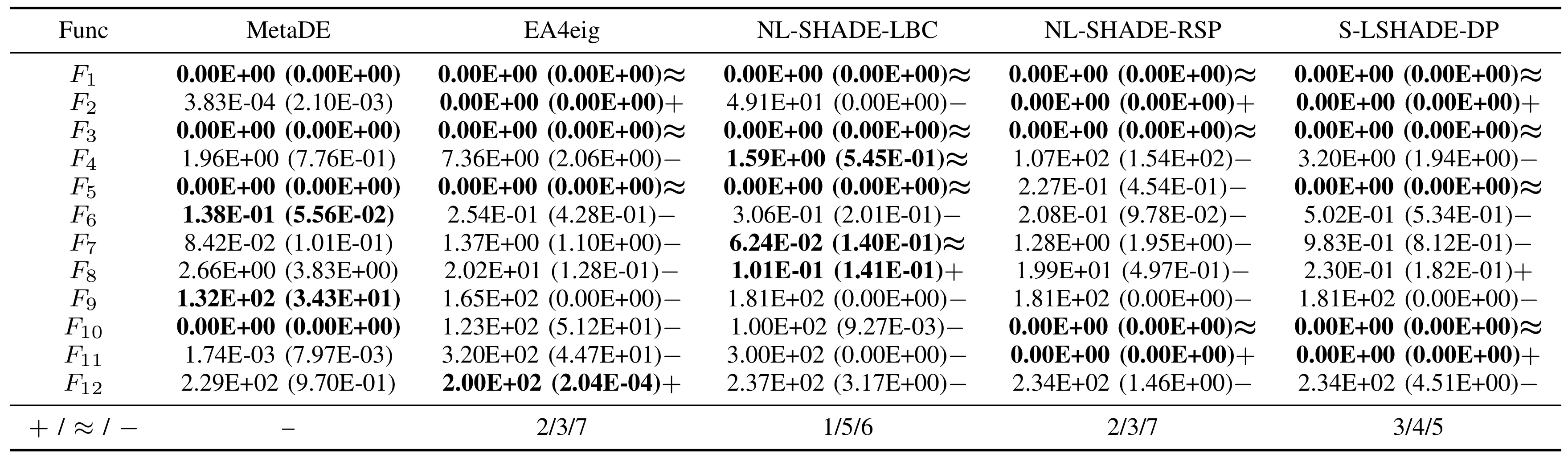
Comparison of 20D CEC2022 Competition Algorithms (Same FEs)
MetaDE consistently demonstrates strong performance, especially on complex problems requiring robust convergence. Owing to its self-adaptive mechanism, MetaDE effectively adjusts its strategy for different search landscapes, thereby improving search efficiency and global optimization capability. These results indicate that MetaDE not only outperforms mainstream DE variants but also exhibits strong competitiveness against top-tier competition algorithms.
Computational Efficiency: FEs Within a Fixed Time (60 seconds)
The research team further recorded the number of function evaluations (FEs) completed by different algorithms within the same fixed runtime (60 seconds).
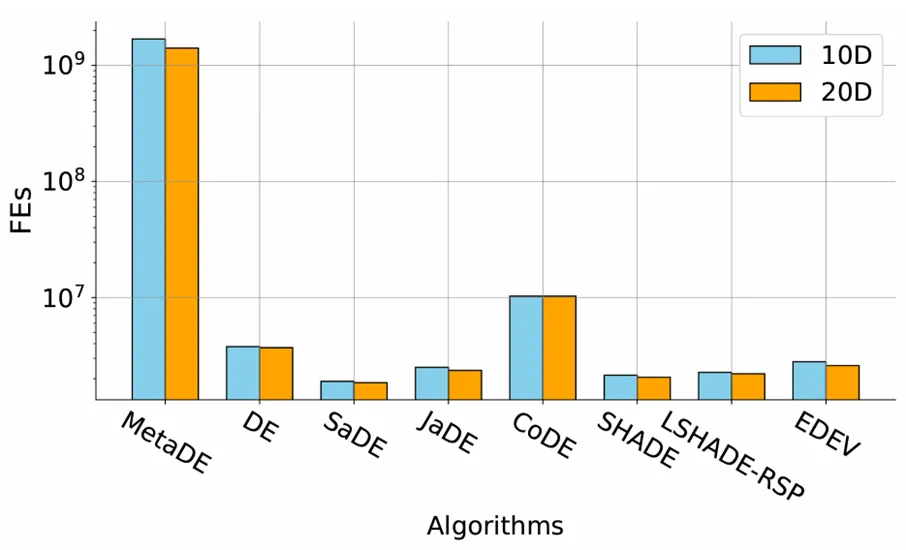
FEs Achieved by Each Algorithm in 60 Seconds
Under the same EvoX framework with GPU-accelerated parallel computation, MetaDE on average achieved 10⁹-level FEs, whereas traditional DE variants only reached around10^6 FEs. This advantage arises from MetaDE’s parameterized approach, which conducts large-scale parallel evaluations of individuals, enabling more efficient hardware resource utilization. Consequently, the algorithm explores more solutions within the same time window, improving both solution quality and stability.
Evolutionary Reinforcement Learning: Robot Control Tasks
MetaDE’s robot-control experiment uses gradient-free search over neural-policy parameters. This particular method does not backpropagate through the policy objective. Evolutionary reinforcement learning is a broader family that also includes gradient-based and hybrid methods; it does not universally eliminate the difficulties faced by PPO or SAC.
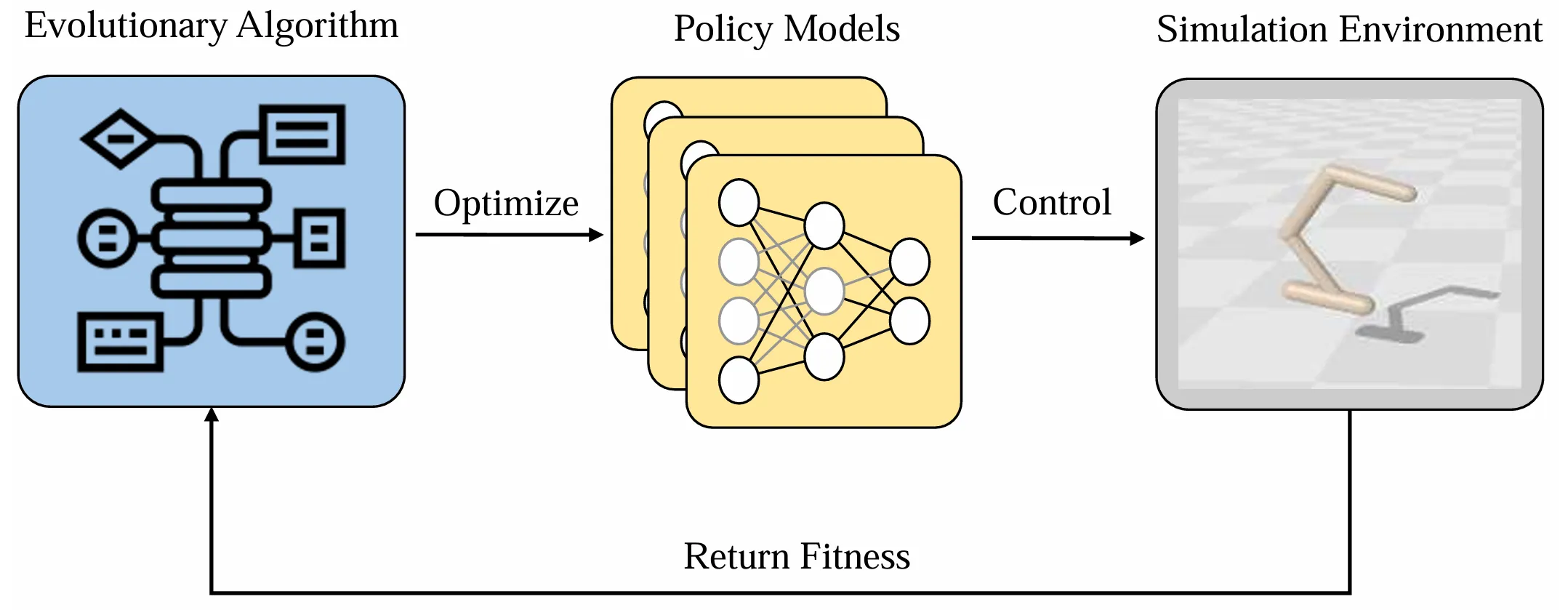
The experiments use Brax Swimmer, Hopper and Reacher with three-layer MLP policies of roughly 1,500 parameters. The inner search optimizes policy weights, while the outer search tunes the DE executor’s parameters and strategies. These are simulated-control benchmarks; they do not establish real-robot deployment or a general improvement in RL training stability.
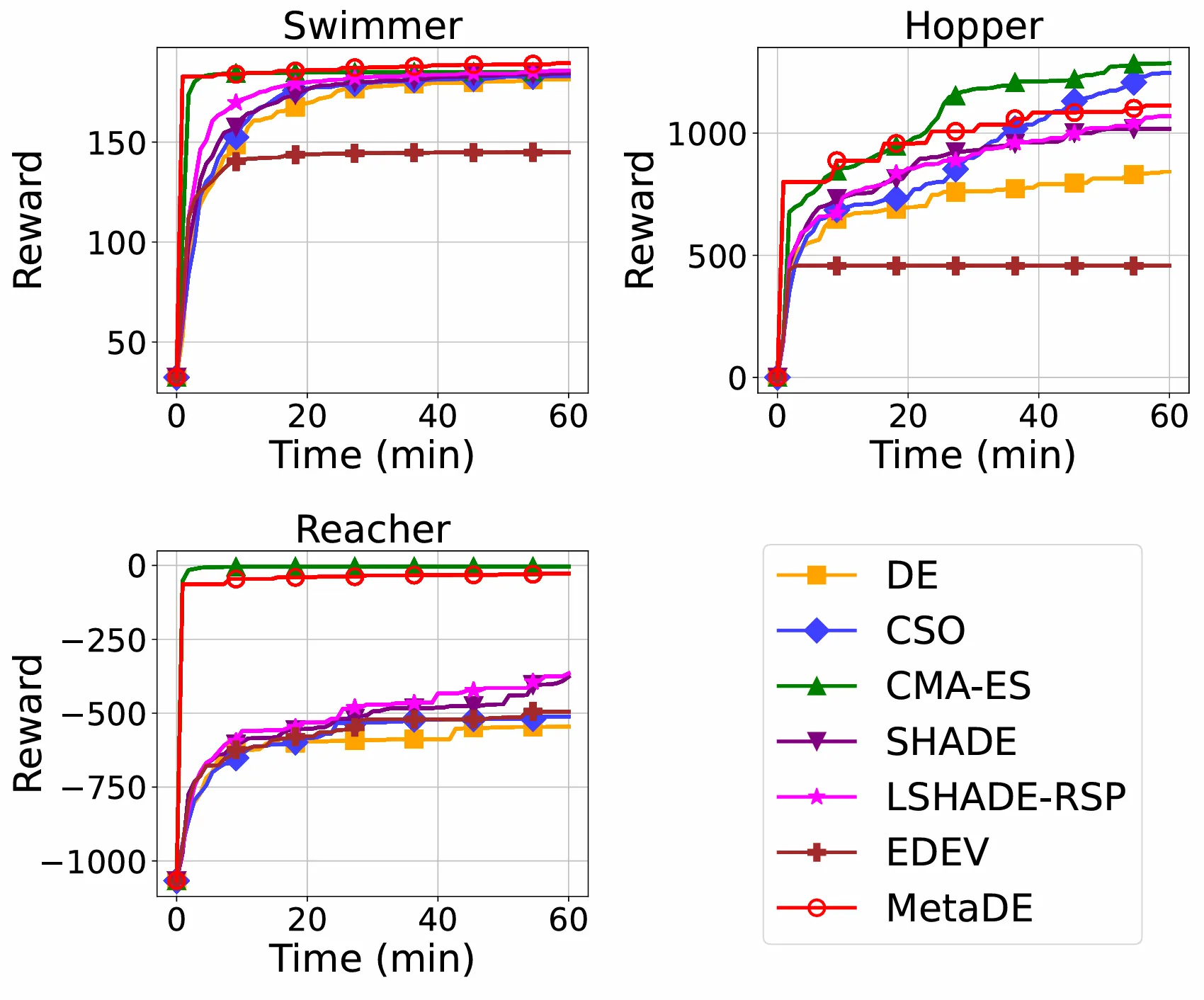
Convergence Curves for Three Brax Environments
As shown in the figure, MetaDE demonstrates strong performance in Brax-based robot control tasks, achieving the best results on the Swimmer task and near-optimal results on Hopper and Reacher. Its main advantage lies in the high quality of the initial population, enabling rapid early-stage convergence and producing high-quality solutions. These findings suggest that MetaDE can efficiently optimize neural network policies, making it well-suited for robot control tasks with complex physical simulations and offering broad potential for practical applications.
Conclusion and Future Directions
Account for both levels of search: record outer configuration trials and inner objective evaluations. Compare methods using the total budget, alongside wall-clock time. iStratDE: Population Diversity as a Principle for Parallel Search