

iStratDE: Computación GPU x Poblaciones Ultra-Grandes Liberan Todo el Potencial de la Evolución Diferencial

La Evolución Diferencial (DE) es altamente sensible a la selección de estrategia. La mayoría de las variantes existentes de DE buscan mejor rendimiento mediante mecanismos adaptativos o estructuras de control cada vez más sofisticadas. Sin embargo, mientras la adaptación dinámica ha sido ampliamente estudiada, los beneficios estructurales de la diversidad estática de estrategias han recibido mucha menos atención.
Para abordar esta brecha, el equipo de EvoX investigó cómo la diversidad de estrategias a nivel individual moldea la dinámica de búsqueda y el rendimiento de optimización de DE, y propuso una variante minimalista: iStratDE (Individual-Level Strategy Diversity Differential Evolution). La idea central es simple: durante la inicialización, a cada individuo se le asigna su propia estrategia de mutación y cruzamiento, y esa asignación permanece fija durante toda la evolución. Al introducir diversidad a nivel individual —descartando complicados bucles de adaptación y retroalimentación— iStratDE crea una heterogeneidad conductual persistente en toda la población.
Esta propiedad se vuelve especialmente poderosa en poblaciones grandes. Dado que el algoritmo es libre de comunicación por diseño, soporta naturalmente la ejecución paralela eficiente y escala sin problemas a entornos GPU. El equipo también proporciona un análisis de convergencia bajo supuestos estándar de alcanzabilidad, estableciendo la convergencia casi segura del mejor fitness encontrado. Extensos experimentos en el benchmark CEC2022 y tareas de control robótico muestran que iStratDE puede igualar o incluso superar a las variantes adaptativas convencionales de DE. El código fuente ha sido publicado en GitHub: https://github.com/EMI-Group/istratde
Contexto: La Computación Evolutiva en la Trampa de la Complejidad
DE ha sido durante mucho tiempo una de las herramientas más efectivas para la optimización continua gracias a sus operadores simples y su fuerte capacidad de búsqueda. Sin embargo, su rendimiento depende en gran medida de la elección de la estrategia de mutación y los parámetros de control como F y CR. Según el teorema No Free Lunch, ninguna configuración única puede dominar en todos los problemas.
Durante las últimas dos décadas, la respuesta predominante ha sido hacer DE cada vez más adaptativo. Desde SaDE hasta la familia LSHADE, los algoritmos se han vuelto más “inteligentes” al mantener archivos históricos, estimar tasas de éxito de estrategias y ajustar parámetros a nivel poblacional. Pero esta inteligencia tiene un costo. La lógica de control centralizada introduce una sobrecarga computacional sustancial y, más importante aún, severas barreras de sincronización. En la era del paralelismo GPU, tal dependencia del intercambio global de información frecuentemente lleva a una pobre utilización del hardware e impide que los algoritmos exploten completamente el cómputo disponible.
Rompiendo el Punto Muerto: Minimalismo y Diversidad Estructural
¿Es posible preservar la naturaleza minimalista de DE mientras se logra la robustez —o incluso un rendimiento superior— de las variantes adaptativas complejas?
El equipo de EvoX responde a esta pregunta con una propuesta contraintuitiva: iStratDE. En lugar de intentar hacer el algoritmo “más inteligente” durante la ejecución, iStratDE le da a la población la máxima diversidad desde el inicio. Respaldado por el framework distribuido y acelerado por GPU EvoX, iStratDE demuestra que la evolución paralela a gran escala puede fortalecerse dramáticamente mediante una simple asignación de estrategias a nivel individual, sin introducir ningún mecanismo adaptativo.
¿Qué es iStratDE?
La filosofía de iStratDE puede resumirse como “diferentes individuos, diferentes roles.”
En las variantes convencionales de DE, las estrategias generalmente se definen o adaptan a nivel poblacional. En iStratDE, la diversidad de estrategias se introduce a nivel del individuo:
- Asignado una vez, fijo de por vida. Durante la inicialización, a cada individuo se le asigna aleatoriamente una estrategia independiente de mutación-cruzamiento y un conjunto de parámetros de control.
- Ejecución descentralizada. Una vez asignadas, estas estrategias permanecen sin cambios durante todo el proceso evolutivo. Cada individuo busca según su propio conjunto de reglas, sin reportar a un controlador central ni esperar retroalimentación de otros.
- Paralelismo intrínseco. Dado que los individuos no dependen unos de otros a través de sincronización compleja, iStratDE elimina la sobrecarga de comunicación y se mapea naturalmente a la arquitectura SIMT de la GPU.
Si la DE adaptativa tradicional se asemeja a un ejército cuyas tácticas son coordinadas centralmente por un comandante, entonces iStratDE se asemeja a un ecosistema. Algunos individuos están naturalmente adaptados para la exploración de largo alcance, mientras que otros son mejores en la explotación localizada. Esta heterogeneidad no solo proporciona redundancia contra la convergencia prematura, sino que también permite contribuciones asíncronas que mantienen a la población avanzando constantemente hacia mejores soluciones.
¿Por Qué Funciona iStratDE?
A pesar de su simplicidad, iStratDE funciona notablemente bien tanto en el benchmark CEC2022 como en tareas de control robótico con Brax. Dos mecanismos son especialmente importantes:
- Elitismo implícito. No toda estrategia es adecuada para cada problema, pero en una población suficientemente grande, algunos individuos recibirán configuraciones altamente compatibles. Estos “élites” ascienden rápidamente y guían la búsqueda hacia regiones de alta calidad.
- Convergencia asíncrona. Diferentes estrategias convergen a diferentes velocidades. Algunos individuos logran avances agresivos tempranamente, mientras que otros mejoran de manera más estable posteriormente. Esta diversidad en el tempo de convergencia ayuda a prevenir que la población colapse demasiado pronto en óptimos locales.
Ventajas Centrales de iStratDE
Al introducir diversidad de estrategias a nivel individual, iStratDE ofrece varios beneficios importantes:
- Extrema simplicidad estructural. Elimina archivos históricos, módulos de aprendizaje de parámetros e hiperparámetros extra, devolviendo a DE una forma limpia y altamente reproducible.
- Excelente eficiencia GPU. Gracias a su diseño libre de comunicación, iStratDE logra aceleración casi lineal en GPUs y puede manejar poblaciones de más de 100,000 individuos.
- Mejor rendimiento con poblaciones más grandes. A diferencia de muchas variantes tradicionales de DE, que frecuentemente sufren cuellos de botella de eficiencia cuando la población crece demasiado, iStratDE se beneficia directamente de la escala: más individuos significan mayor diversidad, cobertura más amplia de estrategias y rendimiento de búsqueda más fuerte.
- Respaldo teórico. El resultado de convergencia casi segura proporciona una base matemática sólida para este diseño minimalista.
Detalles de Implementación
iStratDE integra estrechamente la tensorización con la aceleración GPU. Su eficiencia proviene de un distintivo diseño de bloqueo de comunicación: a diferencia de los algoritmos adaptativos que dependen de estadísticas centralizadas, las estrategias de los individuos en iStratDE son completamente independientes, eliminando requerimientos de sincronización y alineándose perfectamente con el modelo SIMT de la GPU.
Con el soporte del framework EvoX, iStratDE puede evolucionar eficientemente poblaciones de más de 100,000 individuos en paralelo. Esta independencia tensorizada no solo mejora el rendimiento para optimización a gran escala, sino que también permite una amplia cobertura del espacio de búsqueda mediante exploración concurrente masiva.
Construcción del Pool de Estrategias
Para crear diversidad en la población, el equipo construye un pool de estrategias con 192 configuraciones. Cada estrategia sigue la forma DE/bl-to-br/dn/cs, y está compuesta por elementos modulares:
- Vector base izquierdo, seleccionado de
rand,best,pbestocurrent - Vector base derecho, también seleccionado de
rand,best,pbestocurrent - Número de vectores diferenciales, elegido de
{1, 2, 3, 4} - Esquema de cruzamiento, incluyendo cruzamiento binomial, exponencial y aritmético
Además, el factor de escala F y la tasa de cruzamiento CR de cada individuo se muestrean independientemente de U(0, 1). A través de diferentes combinaciones de estos componentes, iStratDE genera un amplio espectro de comportamientos de búsqueda, desde altamente exploratorios hasta fuertemente explotadores.
Visión General de la Arquitectura
iStratDE sigue un flujo de trabajo descentralizado extremadamente simple:
- Asignación inicial. El sistema inicializa las posiciones de la población y asigna aleatoriamente a cada individuo una estrategia y un conjunto de parámetros dedicados.
- Evolución persistente. Durante el ciclo de optimización, cada individuo siempre realiza mutación y cruzamiento según su configuración asignada. Las soluciones evolucionan, pero las estrategias no.
- Integración implícita. Debido a que la población es grande y heterogénea, iStratDE no requiere coordinación adaptativa explícita. Surge una división natural del trabajo: los individuos orientados a la exploración descubren nuevas regiones, mientras que los orientados a la explotación refinan soluciones prometedoras.
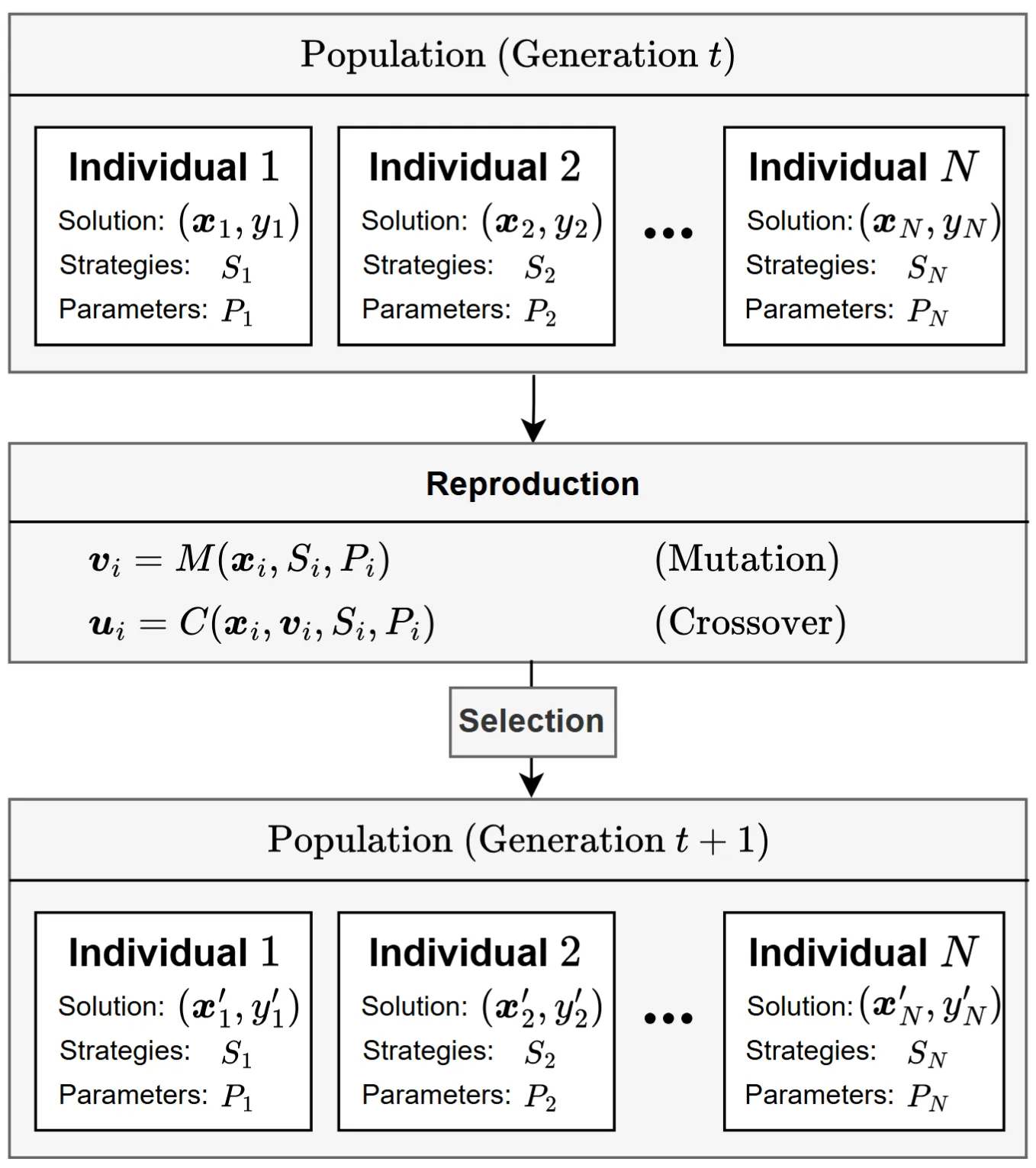 Fig. 1. Framework de iStratDE, ilustrando la inicialización, asignación descentralizada de estrategias y evolución persistente.
Resultados Experimentales Destacados
Para evaluar iStratDE en configuraciones genuinamente paralelas a gran escala, el equipo de EvoX realizó experimentos sistemáticos bajo un presupuesto de tiempo fijo, lo cual refleja mejor las condiciones reales de computación de alto rendimiento que la evaluación convencional con evaluaciones de función fijas.
Los experimentos incluyen:
- Pruebas de estrés con poblaciones ultra-grandes, escalando a 100,000 individuos
- Benchmarks CEC2022, comparando iStratDE contra variantes adaptativas convencionales de DE y los mejores métodos de competencia en 60 segundos
- Análisis de escalabilidad poblacional, mostrando que iStratDE sigue mejorando a medida que la población crece mientras los métodos tradicionales alcanzan un cuello de botella de escala
- Tareas de control robótico, usando poblaciones grandes para optimizar controladores neuronales de alta dimensión en Brax
1. Benchmarks CEC2022 Bajo un Presupuesto de Tiempo Fijo
Bajo el mismo presupuesto de 60 segundos, los algoritmos adaptativos tradicionales permanecen restringidos al tamaño clásico de población de alrededor de 100 debido a su lógica serial y sobrecarga de sincronización. En contraste, iStratDE está diseñado específicamente para la ejecución SIMT en GPU y puede manejar eficientemente poblaciones de 100,000 individuos.
Como resultado, iStratDE realiza hasta 10^9 evaluaciones de función dentro de la misma ventana de tiempo, alcanzando aproximadamente 100x el rendimiento computacional de los métodos convencionales. En la mayoría de las funciones de benchmark, esta combinación de estructura minimalista y paralelismo masivo lleva a una mayor velocidad de convergencia y precisión final.
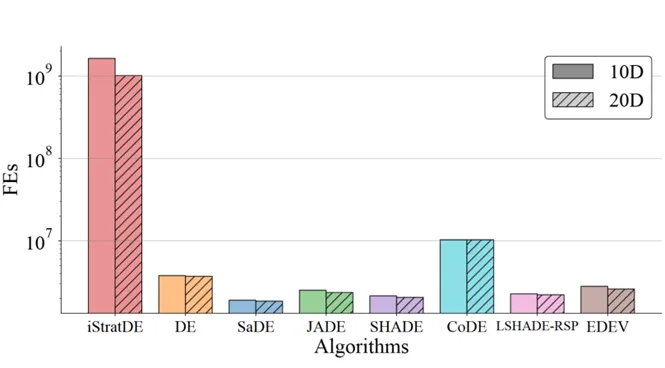 Fig. 2. Comparación de rendimiento de evaluaciones de función bajo un presupuesto de tiempo fijo.
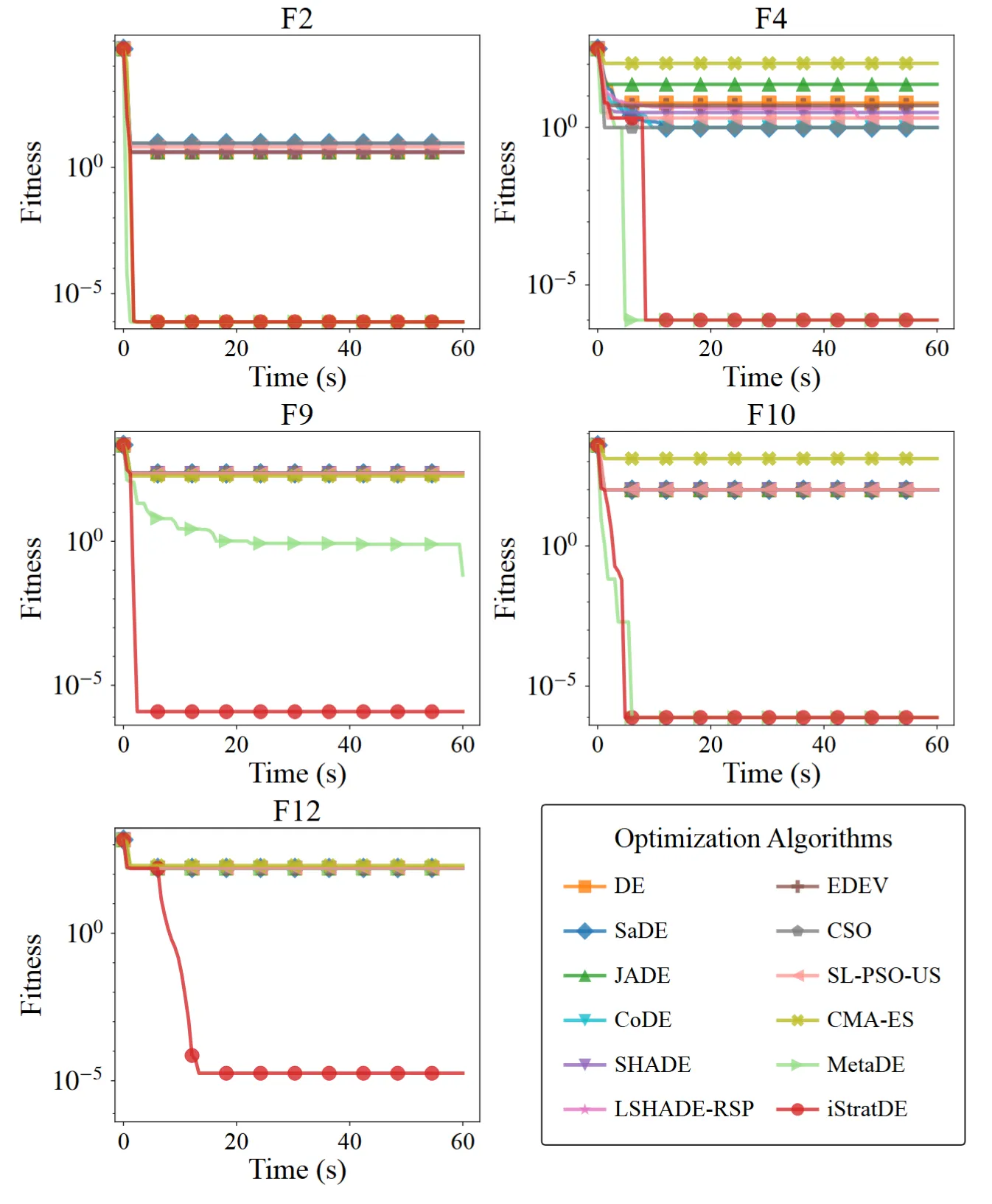 Fig. 3. Comparación de rendimiento de optimización en el benchmark CEC2022 de 10 dimensiones.
2. Robustez en Paisajes de Alta Dimensión
El equipo evalúa además iStratDE en desafiantes versiones 200-dimensionales rotadas y desplazadas de Schwefel, Rastrigin y Ackley. Los métodos adaptativos tradicionales de DE como JADE y SHADE, así como CMA-ES, sufren enormemente por la maldición de la dimensionalidad y frecuentemente se estancan tempranamente.
En contraste, iStratDE mantiene un fuerte impulso de búsqueda a través de una combinación de paralelismo a gran escala y diversidad de estrategias. No solo supera a líneas base especializadas como CSO, sino que también demuestra robustez competitiva contra MetaDE, un optimizador reciente basado en aprendizaje en GPU. En funciones difíciles como Ackley, iStratDE localiza exitosamente el óptimo global.
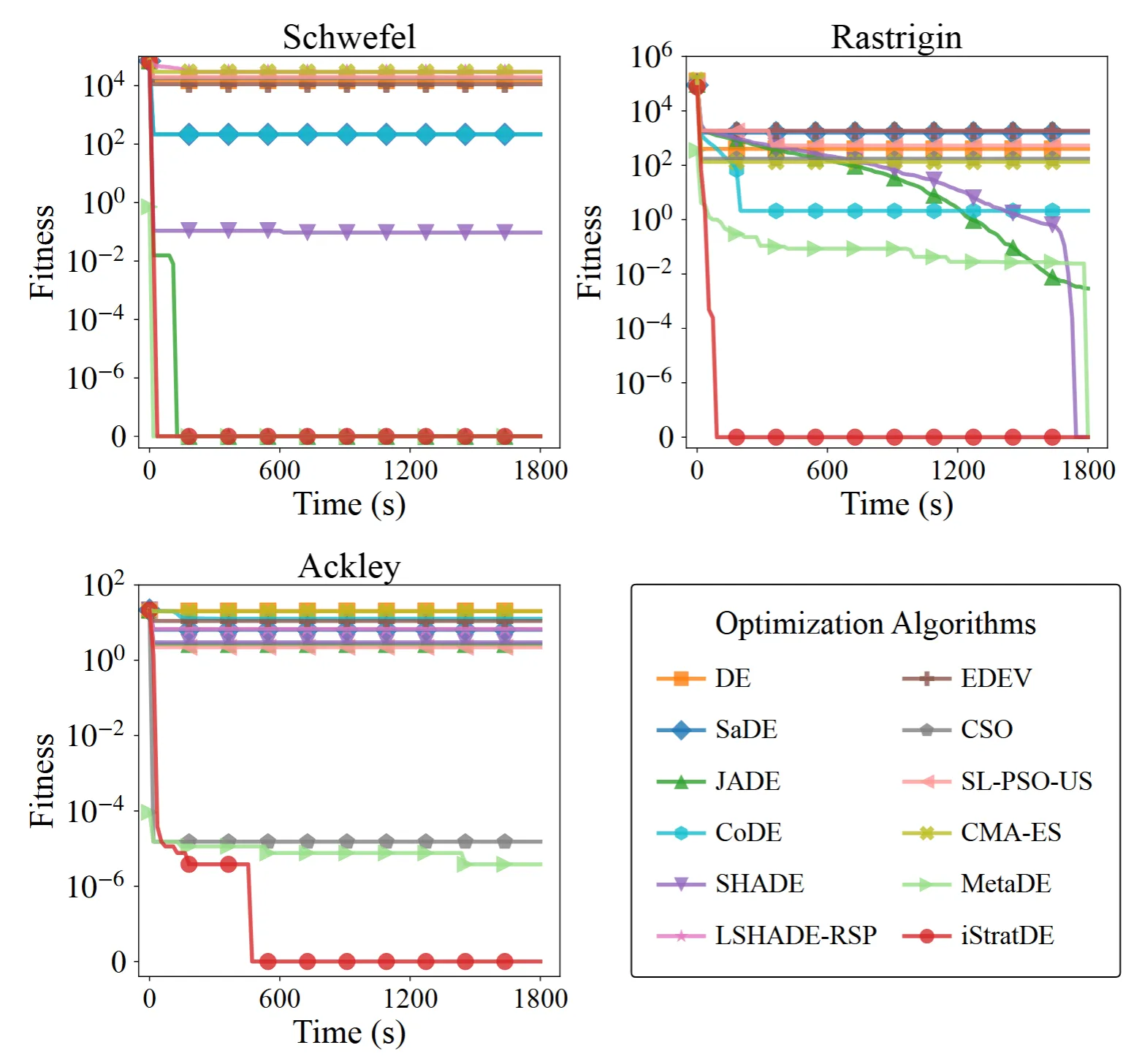 Fig. 4. Comparación de rendimiento en problemas de benchmark desplazados y rotados de 200 dimensiones.
3. Escalabilidad Poblacional
Uno de los hallazgos más llamativos es que iStratDE rompe la suposición clásica de que simplemente agrandar la población no sigue mejorando DE. Cuando el tamaño de la población crece de 10^2 a 4 x 10^5, iStratDE continúa mejorando de manera constante, sin señales claras de saturación.
En contraste, los algoritmos adaptativos tradicionales de DE generalmente dejan de beneficiarse una vez que la población excede un umbral moderado, e incluso pueden degradarse debido a la sobrecarga de sincronización. Este resultado sugiere que iStratDE puede convertir recursos computacionales adicionales directamente en mejor rendimiento de optimización.
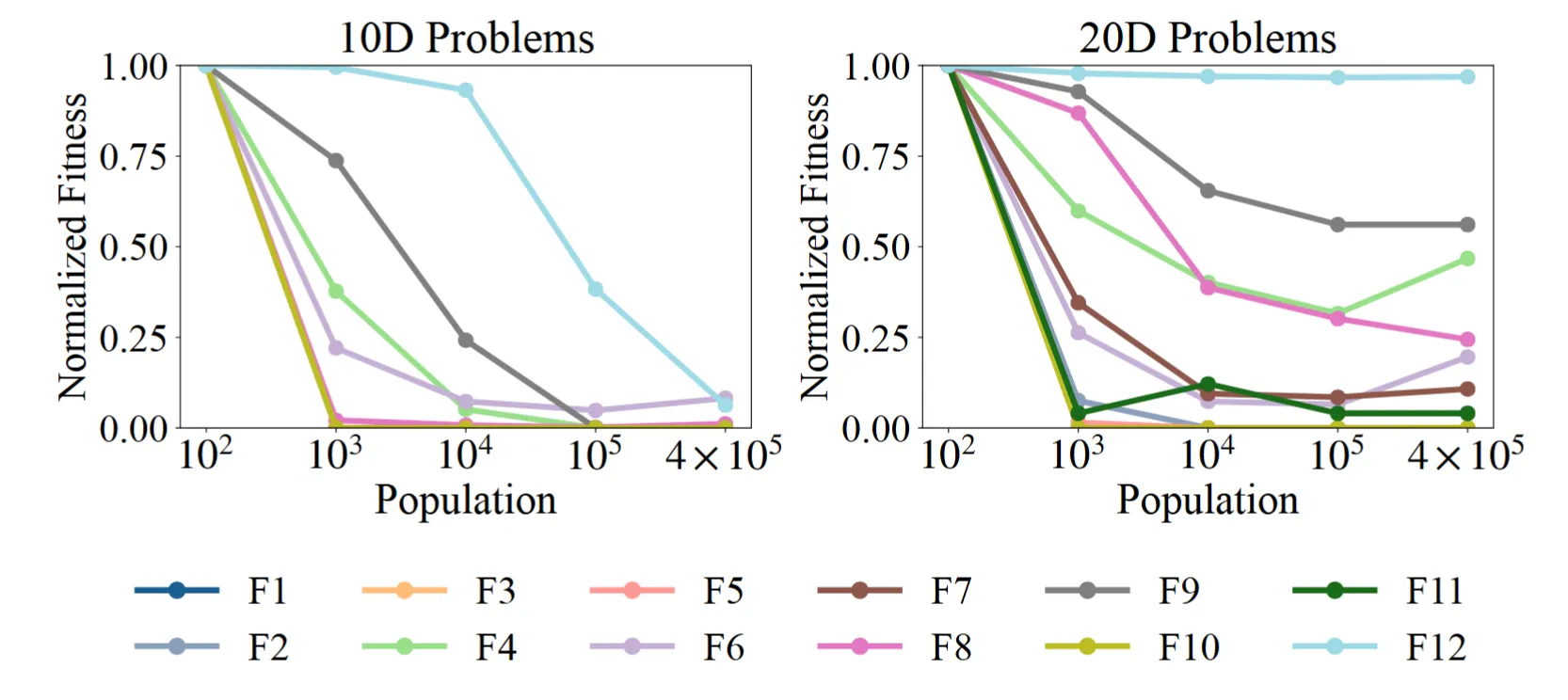 Fig. 5. Análisis de escalabilidad poblacional de iStratDE con tamaños de población crecientes.
4. Comparación con los Mejores Métodos de la Competencia CEC2022
Para probar el límite superior de rendimiento, el equipo compara iStratDE con los métodos mejor clasificados de la competencia CEC2022, incluyendo EA4eig, NL-SHADE-LBC y NL-SHADE-RSP. Bajo presupuestos idénticos de evaluación de funciones, iStratDE permanece altamente competitivo a pesar de su estructura mucho más simple. En varias funciones difíciles de 10D y 20D, logra resultados comparables —o mejores— que estas sofisticadas líneas base.
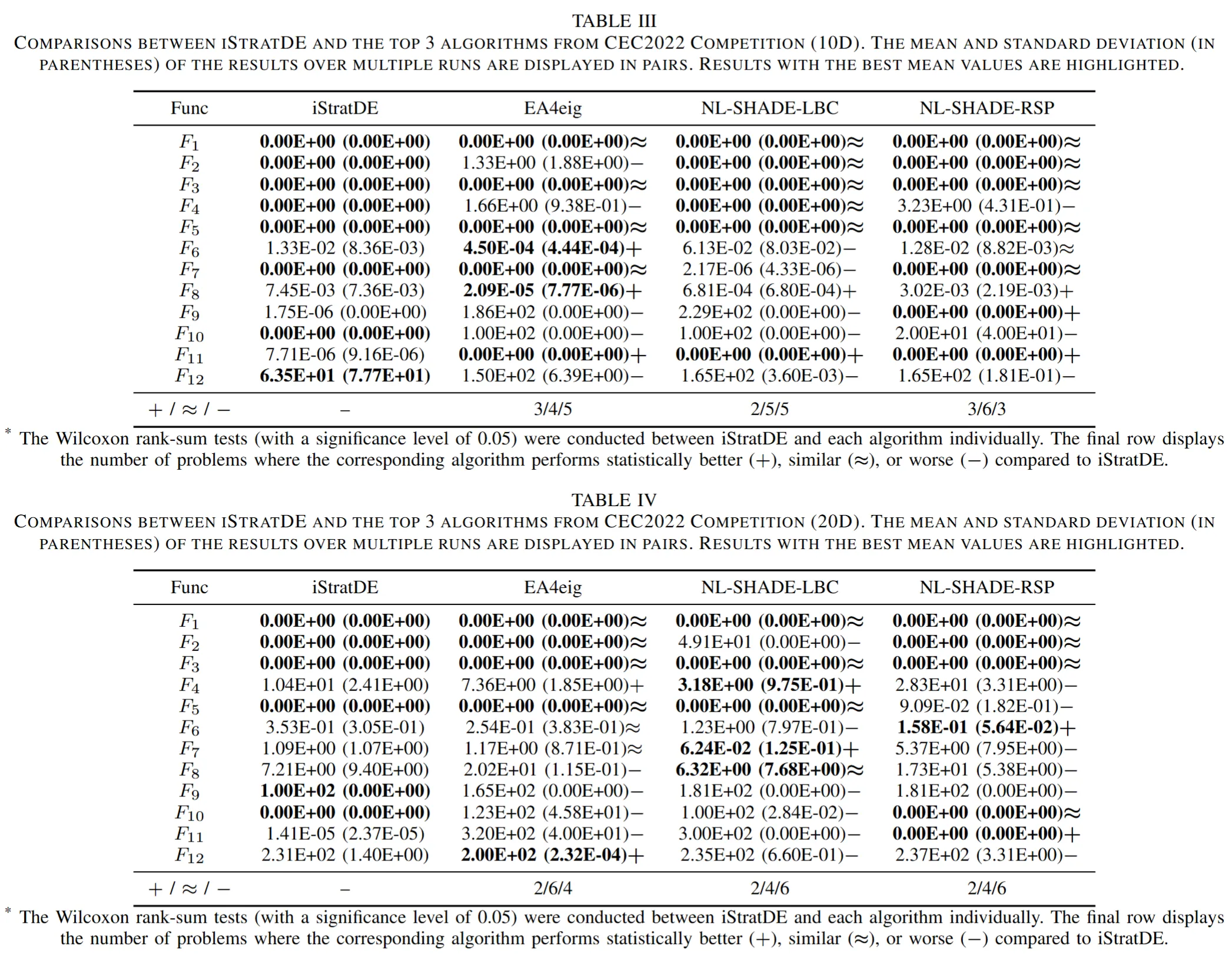 Fig. 6. Comparación de iStratDE con los métodos mejor clasificados de la competencia CEC2022.
5. Aplicación Real: Control Robótico con Brax
Finalmente, el equipo aplica iStratDE a tareas de control robótico en Brax, incluyendo Swimmer, Reacher y Hopper, donde el objetivo es optimizar controladores de redes neuronales con aproximadamente 1,500 parámetros.
Usando una población de 10,000, iStratDE se compara con CMA-ES, CSO y variantes tradicionales de DE. En tareas como Swimmer y Hopper, iStratDE descubre rápidamente políticas de alta recompensa y muestra una convergencia más fuerte que métodos como CMA-ES y LSHADE. Esto demuestra que iStratDE no solo es teóricamente elegante, sino también prácticamente efectivo para la optimización de caja negra en alta dimensión.
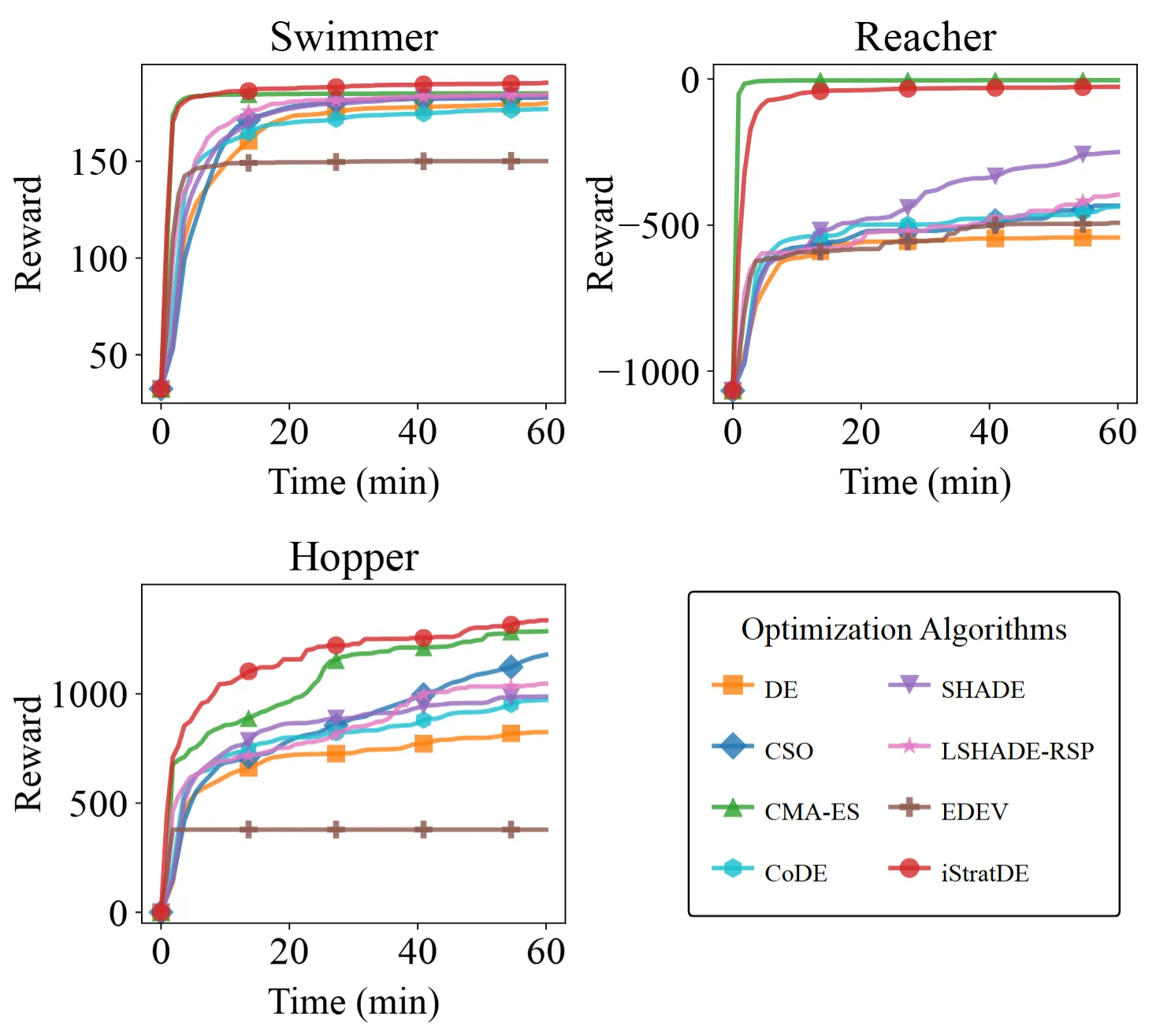 Fig. 7. Curvas de convergencia de iStratDE en tres entornos de control Brax.
Conclusión y Perspectivas
iStratDE es un retorno a los fundamentos algorítmicos. En lugar de apilar lógica adaptativa cada vez más compleja, construye una fuerte capacidad de búsqueda a partir de la diversidad de estrategias a nivel individual. Al liberar completamente el potencial paralelo de las GPUs modernas, iStratDE revela el poder de la diversidad estructurada en la optimización multimodal y de alta dimensión.
Los resultados muestran que iStratDE puede competir con —y en algunos escenarios superar a— las principales variantes adaptativas de DE tanto en benchmarks como en tareas de control del mundo real. Más ampliamente, este trabajo destaca un principio de diseño importante: la complejidad no es el único camino hacia el rendimiento; la heterogeneidad poblacional puede ser por sí misma un poderoso motor de evolución.
Este paradigma minimalista descentralizado abre una nueva dirección para el diseño de algoritmos evolutivos. En lugar de depender de una coordinación centralizada elaborada, demuestra cómo individuos independientes con comportamientos de búsqueda diversos pueden generar colectivamente dinámicas de optimización inteligentes y escalables.
Código Abierto / Recursos Comunitarios
Paper: https://arxiv.org/abs/2602.01147
GitHub: https://github.com/EMI-Group/istratde
Proyecto Principal (EvoX): https://github.com/EMI-Group/evox
Grupo QQ: 297969717
 Código QR del grupo comunitario EvoX en QQ.